GRI — GEE AAR INTERNATIONAL logo GEE AAR INTERNATIONAL Pumps built for dirty water

Rubber Sleeve Manufacturer — 25 mm to 300 mm

Moulded pinch-valve sleeves, pump wear sleeves and hose sleeves, compounded and cured in-house. We match the rubber to your slurry instead of selling you whatever is on the shelf — which is why ours last longer.

Why sleeves fail early

A sleeve that fails is never just a sleeve


When a pinch valve sleeve splits, the line stops. When a pump sleeve wears through, the shaft goes with it. The part costs a few thousand rupees; the shutdown costs a great deal more.

Nearly every early failure we are asked to investigate comes down to the same thing — the sleeve was bought on size alone. Somebody ordered "a 100 mm sleeve" and got whatever compound the supplier happened to mould that week. Natural rubber in an oily line, or nitrile against hot abrasive slurry, will fail in weeks no matter how well it was made.

We ask two more questions before we mould anything: what is going through it, and at what temperature. That is the whole difference.

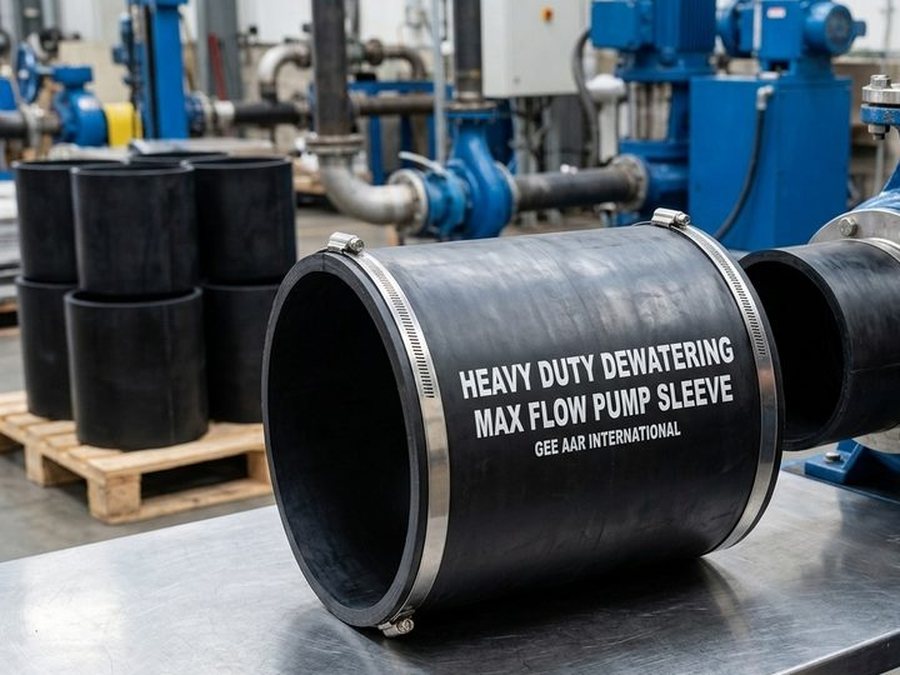
A GEE AAR heavy duty moulded rubber pump sleeve with stainless band clamps, ready to fit to a pump flange

What we mould

Four families of rubber sleeve


All moulded in our own press shop from compounds mixed on our own mill, which is how we can change a formulation for one customer without a minimum order of a thousand pieces.

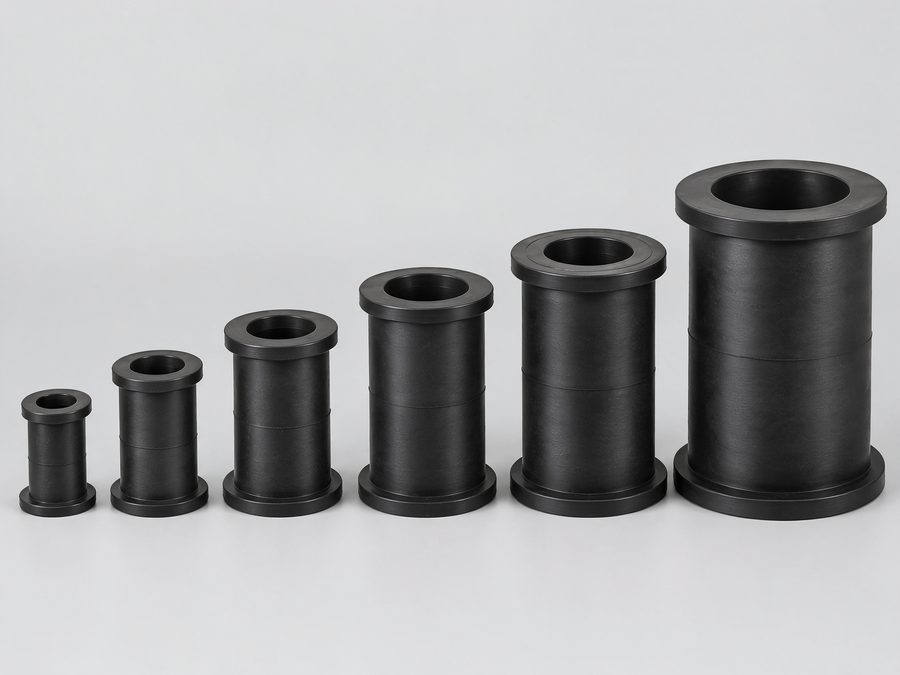
Pinch valve rubber sleeves from 25 mm to 300 mm bore
25 – 300 mm bore

Pinch valve sleeves

The flexible tube that is the whole valve. Fabric-reinforced for cycle life, with the flange face moulded in one piece so it seals without a gasket. Supplied to fit the major pinch valve makes as well as to your own drawing or worn sample.

Typical duty: slurry, ash, lime, cement, sewage, mineral concentrate, abrasive powders.
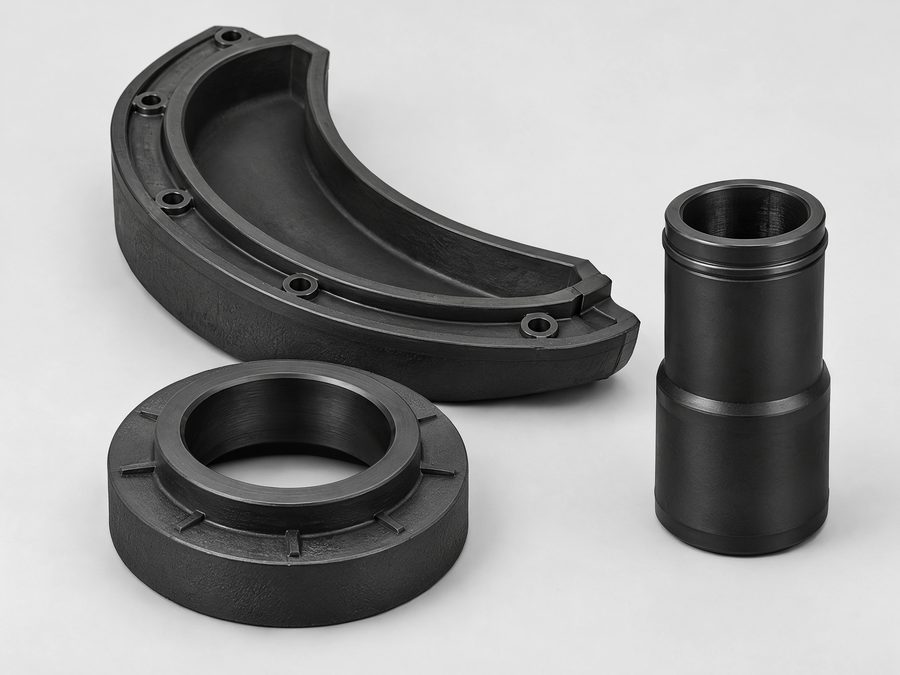
Moulded rubber pump wear sleeves and casing liners for slurry pumps
To sample or drawing

Pump wear sleeves & liners

Shaft sleeves, throat bushes, casing liners and impeller covers for slurry and dewatering pumps. Rubber outlasts metal in fine abrasives because it absorbs the impact instead of being cut by it — the right compound can double a liner's life.

Typical duty: mine slurry, sand, silt, ash handling, tailings.

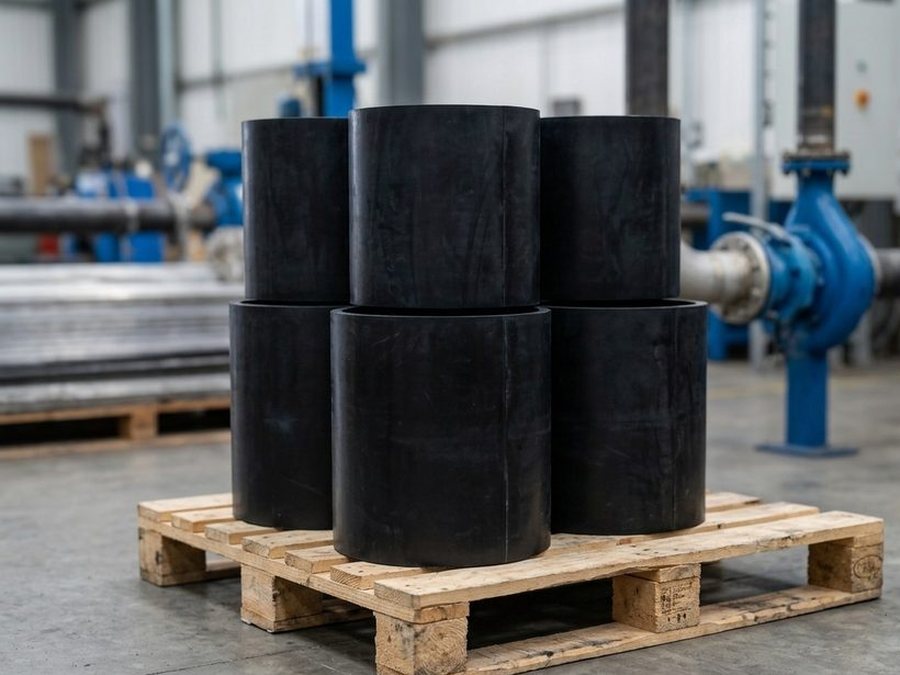
Moulded rubber pump sleeves stacked on a pallet in the GEE AAR works, ready for despatch
Reinforced

Suction & discharge hose sleeves

Flexible connectors and hose sleeves for pump suction and discharge, wire-reinforced where the line runs under vacuum so the sleeve does not collapse on the suction stroke.

Typical duty: pump connections, dredging, tanker loading, dewatering hose runs.

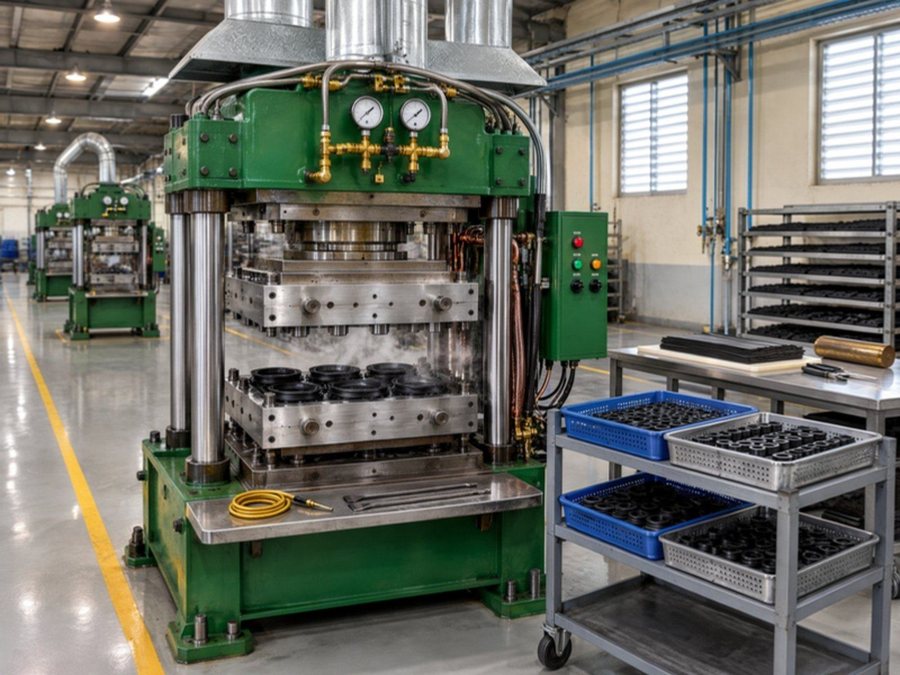
Rubber compression moulding press at the GEE AAR works
Custom moulding

Expansion joints & custom mouldings

Rubber expansion joints, bellows, gaskets, diaphragms, bushes and dampers. Send a worn part or a drawing; if the geometry is mouldable we will quote a tool and a first-article sample.

Typical duty: vibration isolation, thermal movement, pipeline misalignment.

Sizes & compounds

Pick the size. Then let the slurry pick the rubber.


Standard pinch valve sleeve sizes

Standard sleeve size range — non-standard bores moulded to order
Nominal bore Inches Typical wall thickness Reinforcement Common application
25 mm1"6 mm1 ply fabricDosing lines, laboratory and pilot plant
40 mm1½"7 mm1 ply fabricChemical dosing, lime slurry
50 mm2"8 mm2 ply fabricCement and fly-ash transfer
80 mm3"10 mm2 ply fabricSludge and effluent lines
100 mm4"12 mm2–3 ply fabricMineral slurry, sewage, ash
150 mm6"14 mm3 ply fabricTailings, heavy slurry, mine discharge
200 mm8"16 mm3–4 ply fabricBulk slurry and ash handling
250 mm10"18 mm4 ply fabricLarge plant transfer lines
300 mm12"20 mm4 ply fabricHeavy mineral and tailings duty

Compound selection guide

Which rubber for which service
Compound Hardness (Shore A) Temperature range Best at Avoid with
Natural rubber (NR)40–60−20 °C to 70 °CAbrasion resistance — the first choice for sand, silt and mineral slurryOils, fuels, solvents, high heat
Nitrile (NBR)50–70−20 °C to 100 °COil, grease and fuel contaminationOzone exposure, strong acids
EPDM55–75−40 °C to 120 °CHot water, steam, acids, alkalis, outdoor weatheringPetroleum oils and fuels
Neoprene (CR)50–70−30 °C to 100 °CA balanced all-rounder — weather, moderate oil, moderate abrasionSevere abrasion, strong oxidising acids
Polyurethane (PU)70–90−20 °C to 80 °CSharp, coarse abrasives and sliding wearHot water and steam, strong alkalis
Food-grade / white NR50–65−20 °C to 80 °CFood, pharma and potable water linesOils and solvents

Not sure which applies? Tell us the medium, the temperature, the pH and the particle size and we will recommend a compound in writing — including telling you when the cheaper one is good enough.

Why ours last longer

Four decisions taken before the mould closes


We mix our own compound

Rubber bought as pre-mixed sheet is a black box. We compound on our own mill, so the polymer, filler and cure system are chosen for your service rather than for the moulder's convenience.

Full cure, not a fast cure

Under-curing is the quiet reason cheap sleeves go soft and tear. We hold press time and temperature to the compound's actual cure curve even when it costs us press capacity.

Reinforcement that is placed, not floated

Fabric plies are cut on the bias and laid to position so the sleeve flexes evenly. Badly placed reinforcement is what makes a sleeve split along one line after a few thousand cycles.

Every batch checked

Hardness, tensile strength, elongation and bond strength are recorded per batch under our ISO 9001:2015 system, so a sleeve you reorder in three years behaves like the one you have now.

Where they are used

Applications across plant and site


Mining & mineral processing

Tailings lines, thickener underflow, concentrate transfer, dust suppression. Natural rubber sleeves against the abrasion, polyurethane where the ore is coarse and sharp.

Cement, ash & power

Fly-ash and bottom-ash handling, lime dosing, raw meal transfer. High wear, high temperature and a constant duty cycle — EPDM and heat-resistant NR compounds.

Water & effluent treatment

Sludge draw-off, polymer dosing, screened effluent and digester lines. Pinch valves earn their place here because there is nothing inside the bore to clog.

Chemical & process plants

Acid and alkali dosing, slurry catalysts, pigment and paint transfer. Compound is chosen against the specific chemistry, not against a general "chemical resistant" claim.

Dewatering & slurry pumps

Wear sleeves, throat bushes and liners for our own pumps and for other makes — send us the worn part and we will mould a replacement to it.

Food, pharma & potable water

White food-grade natural rubber sleeves for lines where the medium is consumed or ingested, moulded on dedicated tooling.

Ordering

How to order a sleeve without getting it wrong


Send the size

Bore, overall length, flange outside diameter and bolt-hole pattern. A photo of the worn sleeve next to a tape measure is usually enough.

Tell us the medium

What flows through it, at what temperature and pH, and roughly what particle size. This is what decides the compound.

We quote and sample

You get a written compound recommendation with the price. For a new profile we quote the tool separately and send a first-article sample for approval.

Moulded and despatched

Standard sizes from ready stock; moulded-to-order sleeves typically in 7–15 working days depending on tooling. Despatched anywhere in India.

Start a sleeve enquiry

Tell us about the water. We will tell you the pump.

Pit depth, discharge distance, how dirty the water is, and how long you need it for — that is all we need to quote. No obligation, and an honest answer if you need less pump than you think.

Call WhatsApp Get Quote