
Sewage & Sludge Dewatering Systems
Non-clog pumps for the flows that choke everything else — raw sewage, septage, digested sludge and flood water full of debris. Solids to 105 mm in 4", 6" and 8", with the rubber parts moulded in our own press shop.
The real problem
It is not the solids that stop the pump. It is the rags.
A good sludge pump will swallow 40 mm of gravel all day. Put the same pump on a sewage line and it can be choked within the hour — because sewage does not carry gravel, it carries cloth, wipes, sanitary waste, plastic film, hair and fibre.
Those wrap around the leading edge of a conventional impeller and build up into a mat. Flow drops, the motor draws more current, and someone has to open the casing and cut the mass out by hand. On an STP bypass or a desludging job that happens two or three times a shift, and the pump that was cheaper on paper has cost you the whole day.
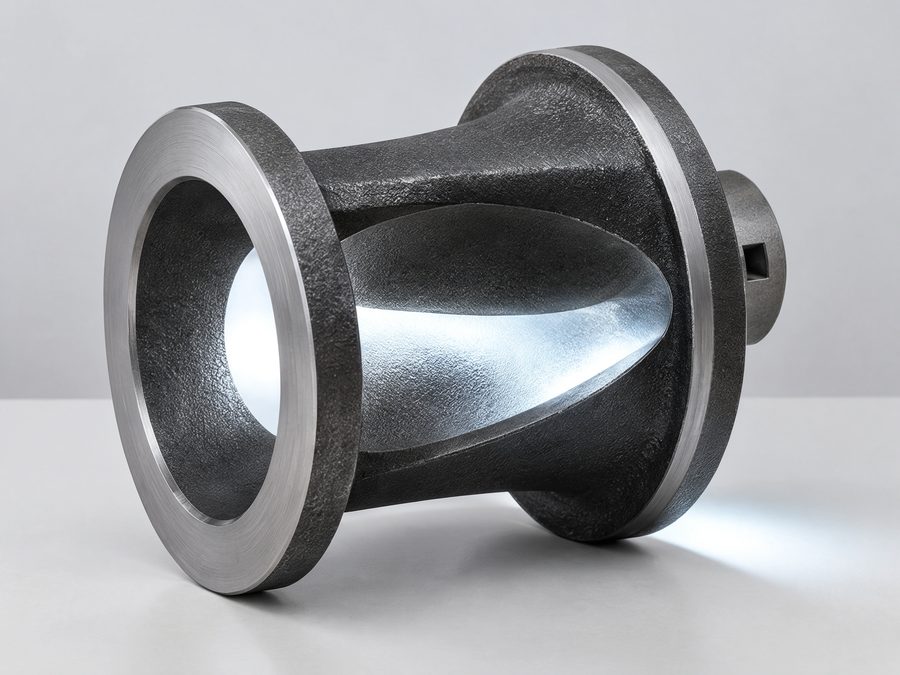
The fix is not more power. It is an impeller with no leading edge for fibre to catch on — a single-channel or vortex non-clog design, with a clear passage wide enough to let the whole object through rather than trying to cut it.
- Solids to 105 mm
- Single-channel & vortex non-clog
- Self-priming, no vacuum pump to fail
- 4", 6" and 8"
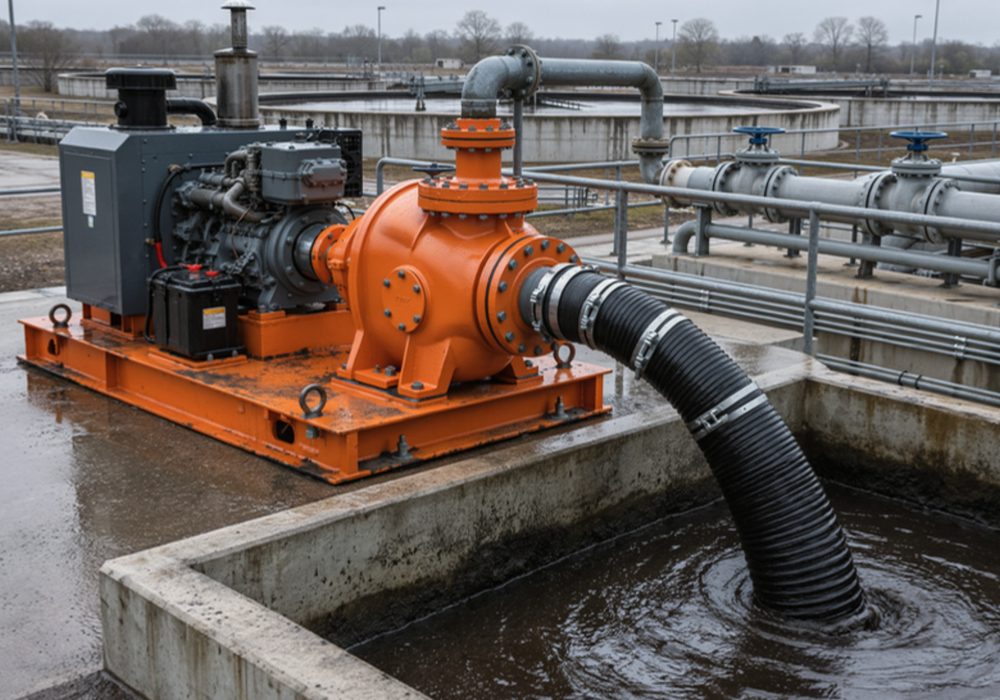
GA-SW series
Non-clog sewage & sludge pumps — 4", 6" and 8"
Three frame sizes, built on the same rebuildable wet end as the rest of our range, with the hydraulics changed for fibrous solids. Every figure below is published here — no PDF request, no "specifications on enquiry".
| Model | Discharge | Max flow | Max head | Power | Solids passed | Dry weight |
|---|---|---|---|---|---|---|
| GA-SW-100 | 100 mm (4") | 1,800 LPM · 108 m³/h | 22 m | 10 HP | 76 mm | 110 kg |
| GA-SW-150 | 150 mm (6") | 3,400 LPM · 204 m³/h | 26 m | 20 HP | 100 mm | 230 kg |
| GA-SW-200 | 200 mm (8") | 5,800 LPM · 348 m³/h | 30 m | 40 HP | 105 mm | 400 kg |
Self-priming, no vacuum pump
The priming chamber does the work, so there is no separate vacuum pump or diaphragm to fail in a wet, dirty environment. It re-primes itself after a dry run or an air lock.
Front-opening inspection cover
When something does get through that should not have, the cover comes off on site with ordinary spanners. No pulling the pump off its base, no dropping the suction line.
Corrosion-resistant build
Sewage is chemically unkind. Coated castings, stainless shaft sleeves and compound-matched elastomers so the pump is not quietly corroding from inside.
Trolley, skid or trailer
Mounted to suit the job — wheeled for manhole-to-manhole work, skid-mounted for a plant installation, trailer-mounted where it has to travel between sites.
The engineering
Two impeller types, two different jobs
"Non-clog" is not one design. We specify whichever of these two suits what is actually in your line, and we will tell you which when you describe the duty.
Single-channel impeller
One continuous passage from inlet to outlet, sized so that anything able to enter the suction can also leave. No vanes to catch fibre. It keeps good efficiency, so running cost stays reasonable on a pump that works all day. This is the default for raw sewage, septage and screened effluent.
Vortex (recessed) impeller
The impeller sits back out of the flow path and spins the liquid rather than pushing it, so most of what you are pumping never touches the impeller at all. Efficiency is lower — it costs more to run — but almost nothing can block it and the wear is minimal. We specify it for heavy sludge, grit-laden septage, and lines where failure is simply not acceptable.
A practical point most suppliers skip: the pump is only as non-clog as its narrowest point. A 100 mm solids rating means nothing if the suction hose has a 50 mm strainer on it, or the discharge goes into a reduced fitting. We supply the hose, strainer and couplings as a matched set for exactly this reason.
Where they work
Sewage and sludge dewatering applications
Sewer & drainage bypass pumping
Over-pumping a live sewer so a section can be repaired, relined or replaced. The flow cannot be stopped and it cannot be allowed to back up, so the pump has to run unattended without choking.
STP & ETP tank emptying
Draining aeration tanks, clarifiers, digesters and sludge-holding tanks for cleaning, inspection or repair — usually inside a shutdown window measured in hours.
Manhole, sump & wet-well desludging
Pulling accumulated sludge and grit out of manholes, pumping-station wet wells and collection sumps, where everything that has ever been flushed has ended up.
Flood & stormwater with debris
Urban flooding where the water carries leaves, plastic, silt and whatever the drain surcharged. Clean-water pumps block in minutes on this; non-clog pumps keep going.
Industrial effluent & wastewater
Process effluent, washdown water, fibrous waste from textile, paper and food plants, and transfer between treatment stages where the liquor is thick.
Septage & lagoon transfer
Emptying septic tanks, soak pits and treatment lagoons, and transferring septage to tankers or treatment — grit-heavy duty that suits the vortex build.
Our rubber division
The rubber in a sewage line is where it usually fails first
Most pump suppliers buy their rubber parts in. We mix our own compounds and mould them in our own press shop — which matters more on sewage than on anything else we do.
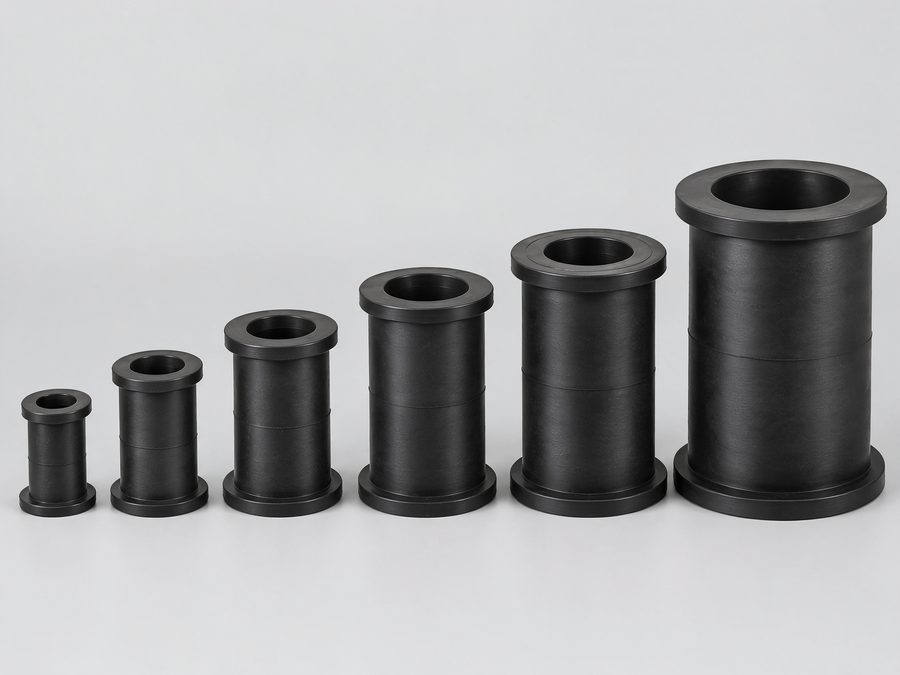
Sewage and sludge lines run on pinch valves, because a pinch valve has nothing inside the bore to catch solids: the sleeve simply squeezes shut. That makes the sleeve the only wearing part — and the one that decides how often the line stops.
Choose the compound badly and it fails in weeks. Natural rubber in a line carrying oils and greases will swell and tear. Nitrile exposed to ozone and sunlight will crack. We ask what is in the line, at what temperature and pH, and mould the sleeve to match.
- Pinch valve sleeves from 25 mm to 300 mm bore, fabric-reinforced for cycle life
- Pump wear sleeves and liners for our pumps and other makes — send the worn part
- Flexible connectors and hose sleeves for the suction and discharge sides
- Compounds in natural rubber, nitrile, EPDM, neoprene, polyurethane and food grade
Working with us
What we supply, and what stays with you
We manufacture and rent the equipment. We are not a desludging or tank-cleaning contractor, and we would rather say so now than on site.
We do
- Specify the impeller type, materials and seal against what is actually in your line
- Supply or rent the pump with matched hoses, strainer and couplings so nothing narrows the passage
- Mould the rubber sleeves and liners in-house to suit the medium
- Deliver and commission on site, and brief your operator
- Stock wear parts and attend rental breakdowns as a priority
You do
- Operate the pump and manage the site
- Provide power or fuel, and a legal discharge point with any consent required
- Handle confined-space entry, gas testing and PPE — sewage work carries real hazards and they belong with a trained crew
- Arrange disposal of what you pump out
Need the job executed rather than the equipment supplied? Tell us — we will be straight with you about whether we are the right firm for it.
Two-minute enquiry
Tell us what is in the line
What you are pumping, how much, and how far. We reply within 2 working hours.
Questions
Sewage and sludge pumping, answered plainly
What size solids can your sewage pumps handle?
Up to 76 mm on the 4-inch GA-SW-100, 100 mm on the 6-inch GA-SW-150 and 105 mm on the 8-inch GA-SW-200. Just as important as the rating is that nothing else in the system is narrower — the strainer, hose and couplings we supply are matched so the pump's passage is genuinely the smallest point.
Why can't I just use a sludge pump on sewage?
A sludge pump is built for granular solids — sand, silt, gravel. Sewage carries rags, wipes, hair and plastic film, which wrap around a conventional impeller's leading edge and build into a mat until flow stops. A non-clog impeller has no leading edge for fibre to catch on, which is why it keeps running where a sludge pump chokes.
What is the difference between a single-channel and a vortex impeller?
A single-channel impeller has one clear passage through it and stays reasonably efficient, so it suits raw sewage and screened effluent on continuous duty. A vortex impeller sits recessed out of the flow and spins the liquid instead of pushing it — far less efficient, so more expensive to run, but almost nothing can block it. We use vortex for heavy sludge, grit-laden septage, and duties where a blockage is unacceptable.
Can I rent a sewage pump rather than buy one?
Yes. Most sewage work is short duration — a bypass during a repair, a tank emptied for maintenance, a flood cleared — which is exactly what rental suits. Daily, weekly and monthly terms, with delivery, commissioning, hoses and breakdown support included. Same-day dispatch across Delhi NCR where stock allows.
Will sewage corrode the pump?
It will attack an unprotected one. Sewage generates hydrogen sulphide, which becomes acidic in the presence of moisture and eats castings and fasteners. Our GA-SW pumps use coated castings, stainless shaft sleeves and elastomers chosen for the medium. Tell us if your effluent is industrial rather than domestic, because the chemistry is different and so is the specification.
Do you supply the pinch valve sleeves for sludge lines too?
Yes, and we mould them ourselves rather than buying them in. Pinch valve sleeves from 25 mm to 300 mm bore in natural rubber, nitrile, EPDM, neoprene, polyurethane and food-grade compounds, matched to what is in your line. Send us a worn sleeve or a drawing and we will quote a replacement. See the rubber sleeve range.
Related
Surface dewatering
Open sump and ditch pumping to keep an excavation dry.
Rubber sleeves
Pinch valve and pump sleeves moulded in-house, 25–300 mm.
Pump on rent
Short-duration hire with delivery and breakdown cover.
Industrial & utilities
ETP, STP and plant shutdown pumping.
Tell us about the water. We will tell you the pump.
Pit depth, discharge distance, how dirty the water is, and how long you need it for — that is all we need to quote. No obligation, and an honest answer if you need less pump than you think.